
Table of Contents
Introduction
India’s love affair with savory snacks is centuries old. From the crunchy sev sprinkled over chaat at a roadside stall to the spicy bhujia served with evening chai in every household, namkeen has always held a special place in our culture. What once started as homemade treats prepared in small family kitchens has now evolved into a thriving, multi-billion-rupee industry that competes confidently on the global stage. Today, namkeen manufacturers in India supply not only the booming domestic market but also cater to a fast-growing international demand driven by the Indian diaspora and curious global snack lovers alike.
This blog takes you behind the scenes of how India’s namkeen ecosystem actually works, why large-scale distribution has become the real backbone of this industry, and what makes our country one of the most respected hubs for traditional savory snacks worldwide.
The Evolution of India's Namkeen Industry
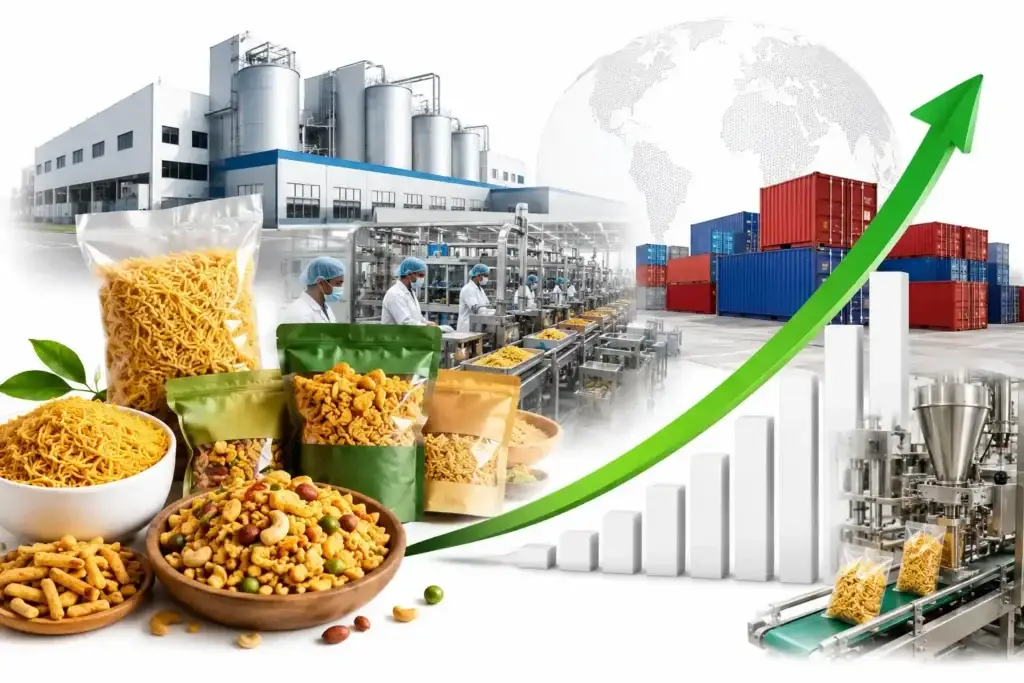
The Indian snack industry has gone through a remarkable transformation over the past two decades. According to industry estimates, the organized namkeen market is currently valued at over ₹45,000 crore and continues to grow at a compound annual rate of 12-15%. This consistent growth is fueled by changing consumer lifestyles, rapid urbanization, rising disposable incomes, and an increasing appetite for ready-to-eat traditional snacks that don’t compromise on taste or authenticity.
What was once a fragmented cottage industry has now become highly organized and technology-driven. Modern snack manufacturing units use automated frying systems, computer-controlled seasoning lines, and nitrogen-flushed packaging machinery to ensure consistent quality and longer shelf life. And yet, despite all this modernization, the soul of Indian namkeen, its authentic regional flavor and handcrafted character, remains beautifully intact. Bulk namkeen suppliers across the country still follow time-tested recipes passed down through generations while adopting cutting-edge food technology to scale production.
Why India Dominates the Global Savory Snack Market
Several powerful factors have positioned India as a global powerhouse in traditional snack production. The country enjoys abundant access to high-quality raw materials like besan (gram flour), pulses, edible oils, and an enormous variety of locally grown spices. This natural advantage allows wholesale snack suppliers to maintain competitive pricing without ever compromising on quality or authenticity.
Another major contributor is India’s deep culinary heritage. Every region has developed its own signature recipes over centuries. Indian snack producers benefit from this diversity by offering hundreds of varieties from Bikaneri bhujia and Ratlami sev to Gujarati farsan and South Indian mixtures. This rich variety not only serves diverse domestic taste preferences but also creates strong export potential in markets that crave authentic ethnic flavors.
Skilled labor, established supply chains, and government support through initiatives like Make in India and APEDA further strengthen this position. Most leading Namkeen manufacturers in India today operate FSSAI-certified facilities that comply with international food safety standards like HACCP, ISO 22000, and BRC, making it easier for Indian brands to enter highly regulated markets across Europe, North America, and the Middle East.
Major Manufacturing Hubs You Should Know
Gujarat : The Heart of Farsan
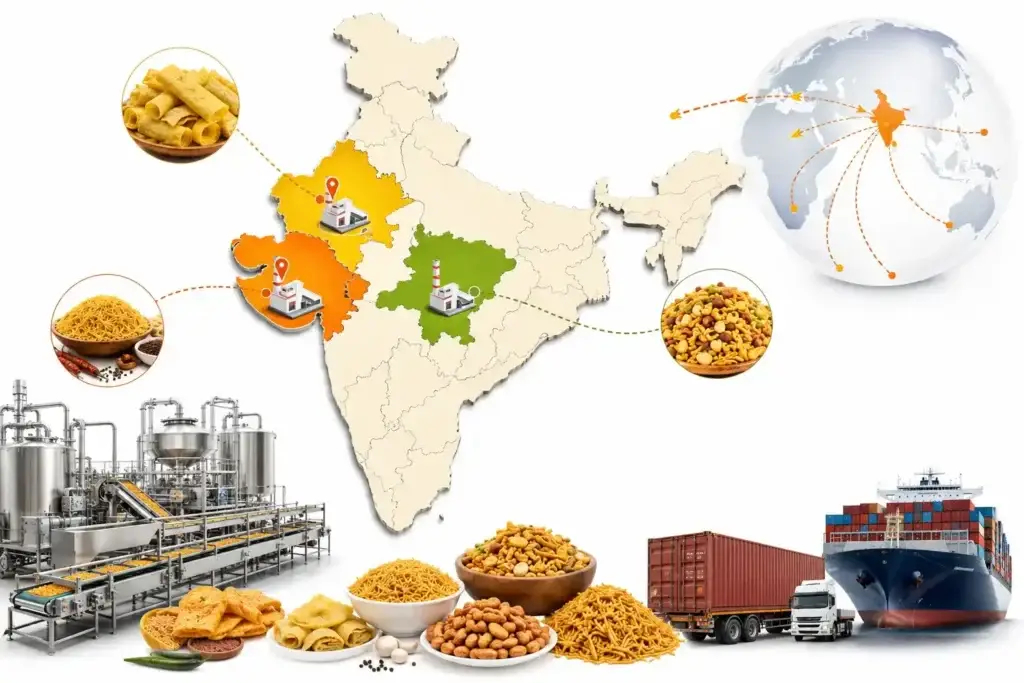
Gujarat, particularly cities like Rajkot, Surat, and Ahmedabad, is often considered the unofficial capital of Indian savory snacks. The state hosts hundreds of manufacturing units producing everything from gathiya and fafda to khakhra and chevda. Gujarat-based snack manufacturers are widely recognized for their hygiene standards, automated production lines, and strong export networks reaching dozens of countries.
Rajasthan : Home of Bikaneri Bhujia
Bikaner has given the world one of the most iconic Indian snacks, bhujia. This single city alone produces over 1,000 tonnes of bhujia daily through hundreds of registered units. The product even holds a GI (Geographical Indication) tag, officially recognizing its unique heritage and authenticity.
Madhya Pradesh : The Sev Belt
Indore and Ratlam are famous for their distinctive sev varieties. Ratlami sev, with its bold peppery kick, has become a household favorite across the country. Madhya Pradesh-based snack producers have also entered the export segment with impressive growth in recent years, especially in the premium namkeen category.
Inside the Modern Manufacturing Process
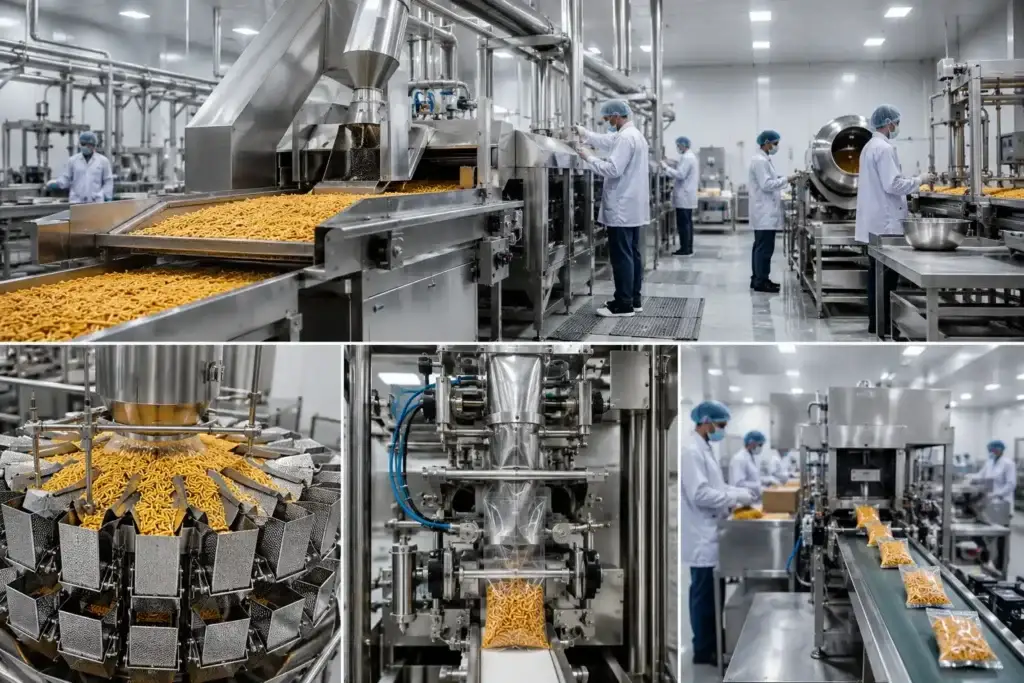
A typical large-scale namkeen production facility operates with surprising precision and care. Raw materials such as besan, rice flour, lentils, refined oils, and spices are sourced from trusted suppliers and tested rigorously for purity. The dough preparation, frying, seasoning, and cooling stages are largely automated to ensure batch-to-batch consistency.
Quality control teams monitor moisture levels, oil absorption rates, texture, and flavor balance at multiple checkpoints. Final products are packed in food-grade, nitrogen-flushed pouches that protect freshness and extend shelf life up to six months or longer. Reputed Namkeen Manufacturers in India invest heavily in in-house laboratories where microbial testing, heavy metal analysis, and sensory evaluations are conducted regularly. This deep commitment to quality and food safety is exactly what has earned Indian snack brands the trust of consumers in over 50 countries today.
The Real Backbone Of Large-Scale Distribution Networks
Domestic Distribution Channels
Within India, the typical distribution model flows from manufacturers to superstockists, then to regional distributors, and finally to retail outlets both organized and unorganized. Modern trade channels like supermarkets, hypermarkets, and convenience stores have grown rapidly in recent years. E-commerce platforms have also emerged as a major sales avenue, especially for premium and specialty namkeens. Wholesale snack suppliers play a critical role in connecting manufacturing units with both kirana shops and large modern retail chains across the country.
Export and International Distribution
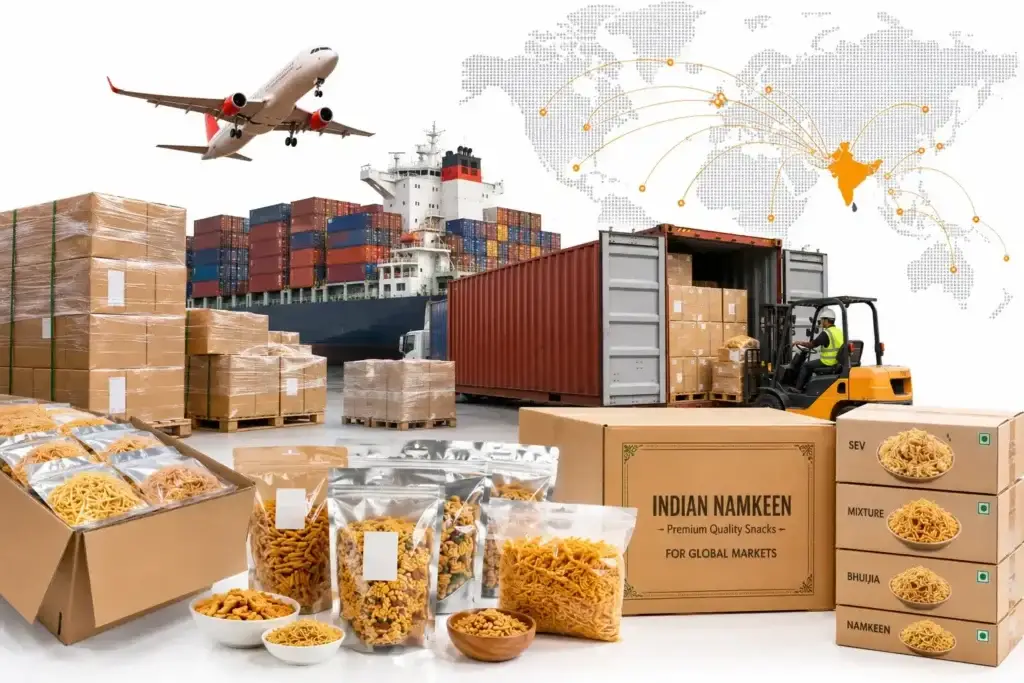
The export segment is where Indian namkeen is truly making its global mark. Countries with significant Indian populations, the United States, the United Kingdom, Canada, Australia, and the UAE represent the biggest markets. Beyond diaspora demand, mainstream international consumers are now discovering Indian snacks as flavorful, plant-based alternatives to heavily processed Western options.
Established Namkeen Manufacturers in India work closely with APEDA, comply with destination country food regulations, and partner with international logistics providers to ensure their products reach overseas shelves in optimal condition. Detailed documentation, batch traceability, and globally recognized certifications form the foundation of this trust-based export ecosystem.
How to Identify a Trustworthy Manufacturing Partner
For retailers, distributors, and importers looking to partner with the right brand, a few essential factors stand out:
- Certifications: Look for FSSAI, ISO 22000, HACCP, BRC, and Halal/Kosher, where relevant.
- Production Capacity: Ensure the unit can consistently handle your volume requirements.
- Quality Documentation: Verify lab test reports, batch records, and shelf-life data before committing.
- Distribution Support: Check whether they offer logistics, custom packaging, and private labeling.
- Reputation and Experience: Trusted manufacturers typically have transparent operations and verifiable client references.
These checks are essential whether you’re sourcing for domestic retail or planning an international export venture.
The Future of India's Namkeen Industry
The next decade promises exciting changes for the Indian snack sector. Health-conscious consumers are driving rapid demand for baked, multigrain, low-sodium, and gluten-free namkeens. Sustainable packaging is becoming a priority, with leading brands shifting toward biodegradable and recyclable materials. Direct-to-consumer (D2C) brands are reshaping the market by selling premium, artisanal namkeens directly online.
Technology adoption including AI-based quality control, blockchain-driven traceability for exports, and automated warehousing will further professionalize the industry. As India strengthens its position in global food trade, namkeen manufacturers in India are well-positioned to lead this transformation, blending centuries-old tradition with modern innovation in genuinely exciting ways.
Conclusion
Whether you’re a wholesale buyer, a retail chain, or an importer looking to bring authentic Indian flavors to your market, choosing the right manufacturing partner makes all the difference between an average product and a bestseller. VasudevWorldExport combines decades of expertise, modern manufacturing infrastructure, and a strong global distribution network to deliver authentic Indian namkeen with consistent, world-class quality.
From traditional bhujia and sev to specialty regional mixtures, we proudly cater to bulk buyers across India and 30+ countries worldwide. Get in touch with our team today to explore our complete product catalog, request samples, or discuss your large-scale distribution requirements. Let’s build a partnership rooted in trust, taste, and tradition together.
Frequently Asked Questions
Indian namkeen offers a unique combination of bold spices, plant-based ingredients, and authentic regional flavors. It appeals to both Indian diaspora communities seeking nostalgic tastes and international consumers looking for flavorful, ready-to-eat snack options that feel different from typical Western snacks.
Yes. Reputed manufacturing units operate under a valid FSSAI license and often carry international certifications like ISO 22000, HACCP, and BRC. These ensure full compliance with strict food safety, hygiene, and quality standards required for both domestic sale and global exports.
Most commercially packaged namkeen has a shelf life of 4 to 6 months, depending on the product type, packaging method, and storage conditions. Nitrogen-flushed pouches significantly extend freshness by preventing oxidation and moisture absorption during transit.
Exports typically involve a manufacturer-to-importer or manufacturer-to-distributor model. The process includes APEDA registration, destination-country labeling compliance, container shipping, cold-chain logistics where required, and reliable partnerships with international freight providers.
Yes. Most large-scale Indian manufacturers offer private label services, custom packaging designs, and even tailored recipes to suit specific regional market preferences, subject to standard minimum order quantities.
Hi, this is a comment.
To get started with moderating, editing, and deleting comments, please visit the Comments screen in the dashboard.
Commenter avatars come from Gravatar.